
The current feed price rise crisis

Of course every pig producer is talking about the feed price crisis now. I have been looking at what you can do at no cost at all to mitigate the extra €0.31/ kg this savage price hike is costing them. You can narrow that gap for no cost at all. Go for it guys!
Of course everyone is talking about the feed price crisis now. From long experience of visiting pig units in the past, and recently in six European countries, I’ve been round the farms of extremely apprehensive producers
 |
Mitigate
I have been looking at what they can do at no cost at all to mitigate the extra €0.31/ kg this savage price hike is costing them. In the present cost crisis, farmers just shut off completely at any mention of spending even a bit more to save more. “Spend something? Get a life!,” they say.
There are at least nine things on my list (which are being published in a couple of full articles on the subject in a forthcoming issues of Pig Progress) on what they and their staff could look at. Food wastage heads the list and even this has nine sub-sections.
Stop wasting food!
Easily the most prominent contributor to narrowing that awful 31 cents /kg gap is in the area of feed wastage.
The calculations I’ve made on some 30 large growout farms is that they must be wasting – by several means, not just direct spillage – about 6% of all the feed they have bought at this new very painful price.
One was at 12% and another must have been 15%. Now I know units where they have got it down to 2%.
Difference
The difference between the average 6% and an acheiveable 2% is a massive 0.96 cents/ kg (€0.096) which closes 31% of the shortfall. Nearly one third of that price hike can be counteracted by your and your staff for nothing more expensive than increased watchfulness and leadership.
Moral – you must redouble your vigilance on feed waste – like this.
* Feeder-trough/hopper throat settings, attended to daily – yes daily! A major contributor.
* The right feed for the type and age of pig, especially the youngsters, as feeding the 15 to 35 kg pig correctly lops days off the finishing feed bill. I calculate, about 12% off the shortfall.
* The right amount of feed, based on daily nutrient intake, not % declarations on the bag or delivery note – consult your nutritionist frequently about this as it soon gets out of kilte ron a busy farm, as feed deliveries arrive and pigs grow and get moved.
* Spoilage: mycotoxins especially, but there are some nasty enteric bugs around for the smaller, less immune-competent smaller pigs which damage food conversion.
* Stale food stored badly or too long, left exposed to smells and flies in barrows awaiting the next feed, and not closing bagged fed once opened.
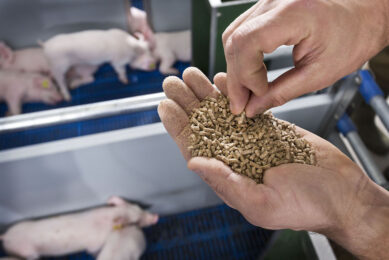
* Accepting dusty, badly-made pellets: send them back.
* Water adequacy: make sure there is enough of it and easily available to even the most timid pig in the pen. Lack of water, even for an hour or two, wastes food as nutrients are not digested effectively.
* When feeding volumetrically – as many are these days, you must do a bulk density test on each delivery as my on-farm tests show it varies considerably, so you need to compensate the calibration device. Not to do so means you are feeding either too much or too little. This device is so easy to make – just a cheap weigh scale, a rubber bucket and a cut-down litre plastic Coke bottle. Two of the farms could have narrowed their shortfall by 0.022 eurocents/ kg just from this alone!
* Shipping pigs on their last morning with a full belly. That’s 2 kg/ pig wasted – doesn’t sound much but on a shipment of 100 pigs it is a fifth of a tonne wasted.
Go for it guys! You can narrow that gap for no cost at all.
Join 18,000+ subscribers
Subscribe to our newsletter to stay updated about all the need-to-know content in the pigsector, three times a week.






 Beheer
 WP Admin
  Bewerk bericht