
Cold breeding results in heavier piglets
Piglets, housed in cold temperatures of about 13-15ËšC, will have a higher feed intake and a quicker growth. That was established by Wageningen University’s Animal Sciences Group (ASG) in the Netherlands.
At delivery to finishing units, due to a higher weight, the animals yield about €5 more than pigs housed at conventional temperatures of 22ËšC. Apart from the growth advantage, housing the animals in relative cold saves on the heating bill, about €0.80 per piglet.
Weaning
At weaning, the ‘cold’ piglets housed are 1.4 kg heavier than pigs grown under conventional temperatures. Two weeks after weaning they are 2.2 kg heavier, after four weeks the difference is 2.3 kg.
There are disadvantages of raising piglets in colder surroundings: more piglets are crushed by sows. In addition, the pigs have a bigger fat layers and a lower meat percentage.
Prevent crushing
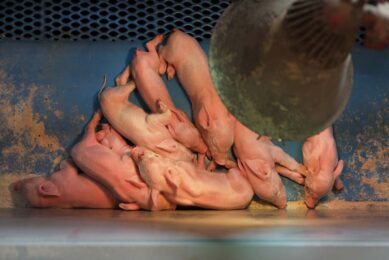
The ASG advises to house the piglets warmly in the first two to three weeks to prevent crushing by sows. After these weeks, the heating could be switched off. This stimulates feed intake and saves energy.
The temperature should not be much lower than 15ËšC to prevent the animals from creating too much backfat, the researchers advised.
Related websites:
• Wageningen University and Research Centre
• Animal Sciences Group
For the latest pig news, subscribe here
Join 18,000+ subscribers
Subscribe to our newsletter to stay updated about all the need-to-know content in the pigsector, three times a week.





 Beheer
 WP Admin
  Bewerk bericht