
Two-thirds of breeding units are badly lit
Many problems related to poor sow reproductive performance are caused by poor lighting. Improvements can be noticed when applying adequate lighting measures.
One of the commonest ‘call-out’ jobs I have been asked to tackle across the world over the past 30 years has been poor reproductive performance in both sows and gilts.
Poor conception rates, a fall-off in farrowing rate, returns to service, ‘silent heats’, a reduction in litter numbers and birthweights.
Varied
Of course the likely cause of all these (mostly female) problems are many, varied and often interrelated. But one factor which can impinge on many if not all of them is the effect of light intensity, especially after weaning, over the few vital days of breeding and – possibly – on into gestation and certainly in it’s first four to six weeks.
As long as 25 years ago I started to notice improvements in many of these problem areas when suggesting to breeders that their lighting in their breeding barns was inadequate.
Inadequate
Inadequate because there wasn’t enough light; inadequate because it was incorrectly placed; inadequate because the timing of the light provided wasn’t under control and was at the mercy of the natural pattern of the seasons.
Since then I can show you many letters from farmers all saying more or less the same thing. “Whatever else you suggested on the farm, following your ideas about light seems to have had a beneficial effect on our breeding results.”
So let’s take a quick look at light, and later on in this series of blogs, go on to cover positioning and controlling light input.
Have enough light
The animals would need enough to read a newspaper in the darkest corner of the breeding barn – not just where the sows or gilts are. How much light? I suggest 150 watts for each 1.5 metres of lateral space. This is about 300-400 lux (lumens).
How much is that? Use a (now old fashioned and therefore relatively cheap) photographer’s hand-held light meter to use it as a light intensity checking guide. For example, if the light meter is set at 200 ASA, 350 lux will be read off at 1/150th at f.11 and 80 lux 1/25th at f.2. if held just in front of the sows or gilts eyes.
Gobbledegook
If this is complete gobbledegook to you, don’t worry – just ask a retail photographer to show you – it is really very simple.
Anyway you can decide on your own check settings to suit yourself as long as you adhere to them subsequently. Many of the breeding units I visit are at or below 60 lux on a dull day and 80-90 lux on a bright one. In my experience this is not nearly bright enough before, during and after mating/AI insemination.
Gestation barn
Where the gestation barn is concerned, the textbooks advise 40 to 60 lux but I don’t think this is enough, and I advise reverting to the ‘newspaper test’ I described above, adding another 150 lux to this figure.
All the same this advice is from my own empirical on-farm experience and I’d love to see some proper research done on it.
But… also provide enough darkness. A correct light/ dark interface is essential, and I will deal with this equally important aspect in my next blog.
Meanwhile I would welcome any comments you may have.
Join 18,000+ subscribers
Subscribe to our newsletter to stay updated about all the need-to-know content in the pigsector, three times a week.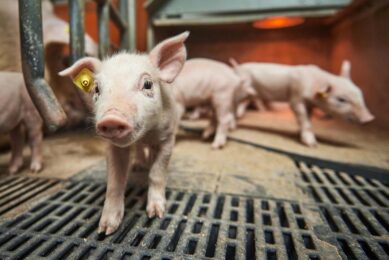






 Beheer
 WP Admin
  Bewerk bericht